

ARCHAEOLOGICAL SITES
- HOME
- ARCHAEOLOGICAL SITES
PHAISTOS (Phaistos / Festos)
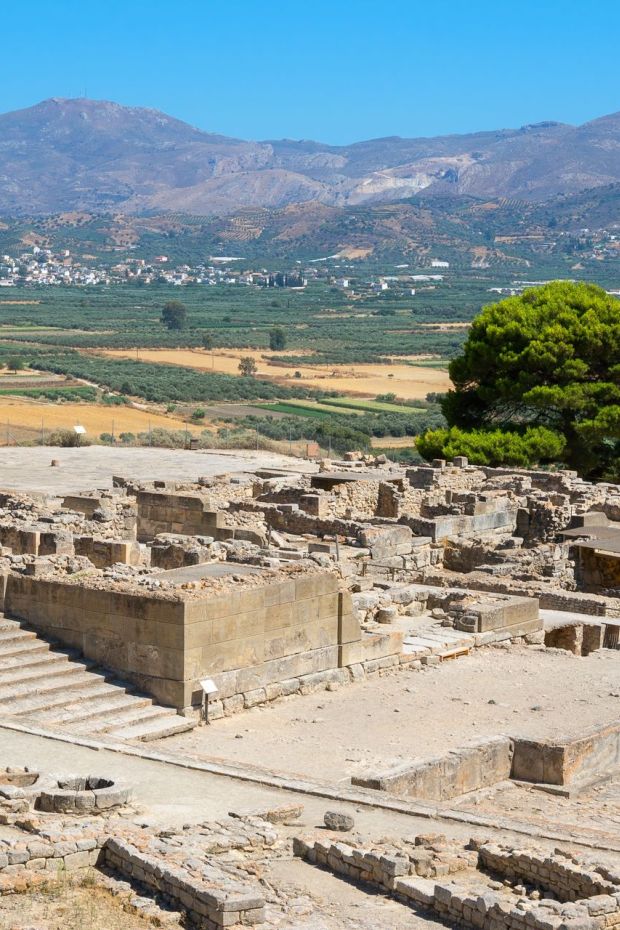
Phaistos was an important Minoan city on Crete, located about 55 km south of Heraklion. The ruins of the ancient settlement overlook the fertile Messara Plain. The area has been inhabited since around 6000 BC, and the city developed in parallel with Knossos until the 1st century BC.
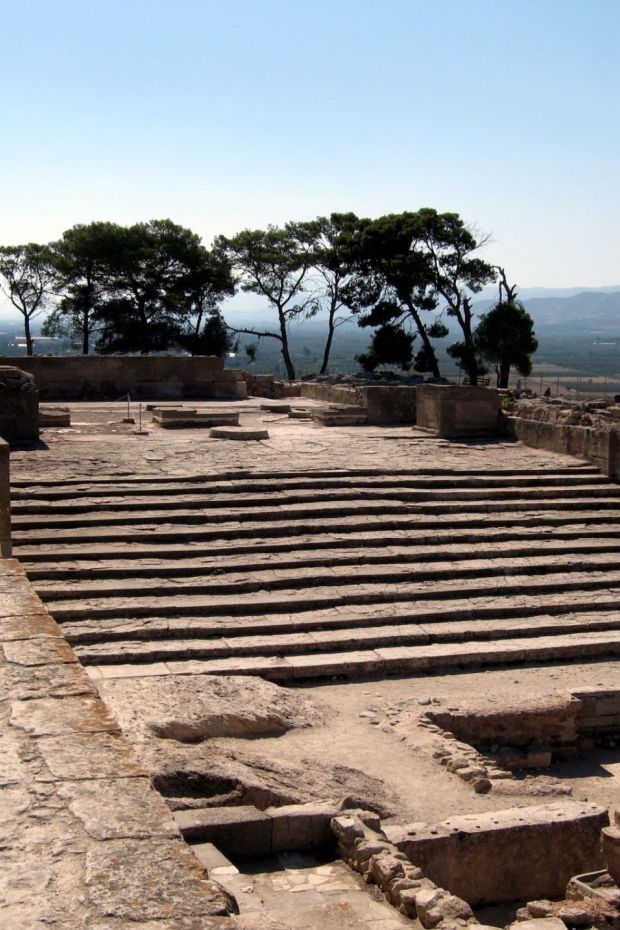
Phaistos is best known for its Minoan palace, one of the most significant archaeological sites in Crete, attracting thousands of visitors every year. The palace was built on a low hill with panoramic views of the surrounding landscape. It is the second largest Minoan palace after Knossos, covering an area of approximately 18 hectares.
According to tradition, the palace was first constructed around 2000 BC, linked to the myth of King Minos and his brother Rhadamanthys. Rhadamanthys, a son of Zeus and Europa, was associated with justice and is considered by legend to have contributed to the early Cretan legal code, later influencing Spartan law. After his death, he was said to have become a judge in the underworld, alongside his brother Minos.
The palace was destroyed around 1700 BC, likely due to an earthquake, and was soon rebuilt. Later, Phaistos declined while the nearby settlement of Agia Triada flourished and can still be visited today. Phaistos remained an important religious center in southern Crete. After another destruction around 1450 BC (possibly again due to seismic activity), the city recovered and even issued its own coinage. This final period of prosperity lasted until the 1st century BC, when it was eventually destroyed by neighboring Gortyn, which became the new capital of Crete.
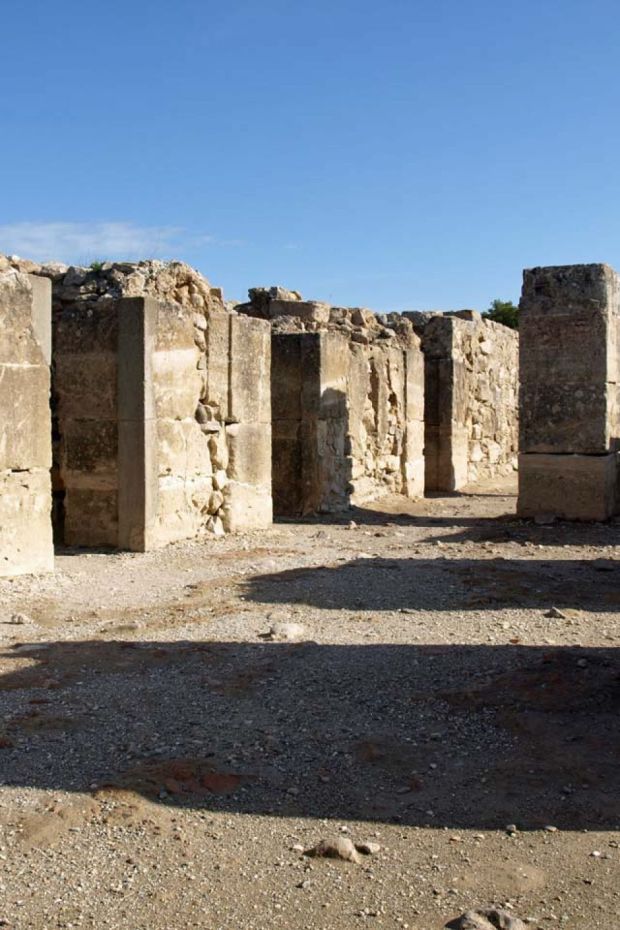
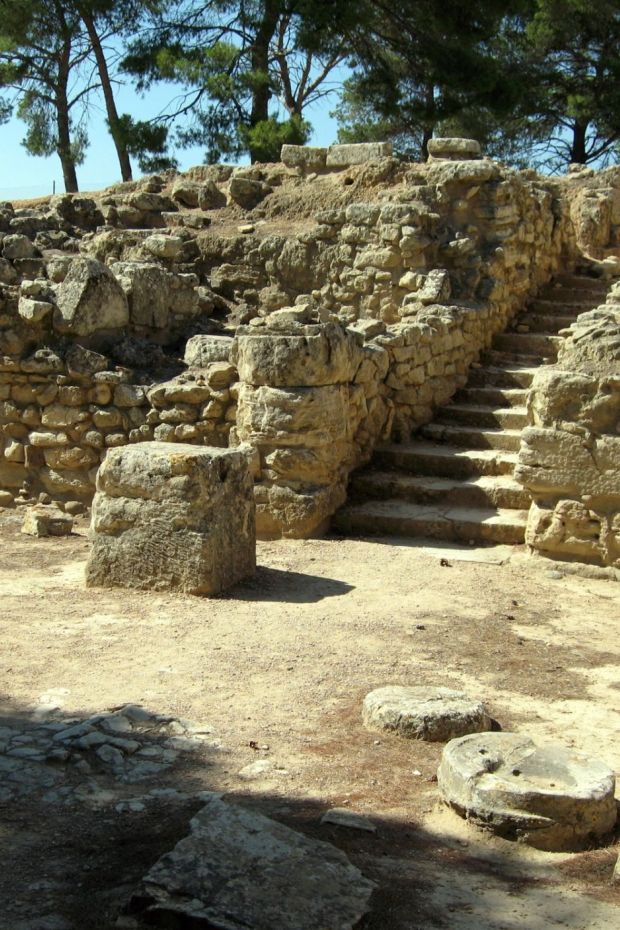
The remains visible today mainly date from 1700–1450 BC. Unlike Knossos, the site has not been reconstructed, preserving its authentic archaeological character. Excavations began in 1900 by the Italian Archaeological School under Federico Halbherr and Luigi Pernier, and continued later between 1950 and 1971 under Doro Levi.